
Every week, GitHub Awesome rounds up 35 self-hosted projects making waves on GitHub, and Episode 5 is packed with some genuinely impressive tools. I watched the full video (embedded below) and dug into each project to bring you the highlights — with screenshots, deployment notes, and the details that matter.
https://www.youtube.com/watch?v=z6QVBXljJwk
Here are the 10 projects that stood out most.
1. TaskView — Self-Hosted Project Management With Teeth

TaskView is a self-hosted project and task management platform that draws a hard line in its own license against ever becoming a hosted SaaS product. Built by Nikolai Giman, it's designed for small software teams that want structure without the overhead of enterprise tools like Jira.
Key features:
- Kanban boards with custom workflows, statuses, and reusable project templates
- Role-based permissions with SAML 2.0, OpenID Connect, and SCIM provisioning
- MCP server for AI assistants — let Claude Code or Cursor manage tasks via natural language
- Built-in time tracking with billable/non-billable hours, workload reports, and financial reports
- GitHub and GitLab integration with signed webhooks
- iOS and Android apps via Capacitor
Tech stack: Vue, Nuxt UI, TypeScript, Node.js, Express, PostgreSQL, Drizzle ORM
Deploy: Docker Compose — github.com/Gimanh/taskview-community
What sets TaskView apart is its TaskView Source-Available License, which explicitly forbids offering it as a hosted SaaS. You can self-host, modify, and use it internally — but nobody can turn it into a commercial cloud service. That's refreshing honesty from a project management tool.
2. ConvertX — 1000+ File Formats, One Docker Container

ConvertX is a self-hosted online file converter that supports over a thousand different formats. Written in TypeScript with Bun and Elysia, it's lean, fast, and dead simple to deploy.
Key features:
- 1000+ format conversions powered by FFmpeg and other engines
- Batch processing — convert multiple files at once
- Password protection and multi-account support
- Auto-delete old files configurable by hour interval
- Optional hardware acceleration via VAAPI
Deploy: Single Docker Compose file — docker compose up -d and you're running.
services:
  convertx:
    image: ghcr.io/c4illin/convertx
    ports:
      - "3000:3000"
    volumes:
      - ./data:/app/data
Access at http://localhost:3000, create the first account, and you have your own private file conversion service. No upload limits, no file size restrictions, no privacy concerns.
GitHub: github.com/C4illin/ConvertX
3. Work-Review — Privacy-First Time Tracking for Your Desk
Work-Review takes a different approach to productivity tracking. Instead of yet another cloud time-tracker, it's a local-first desktop app that captures what you're actually doing — the apps you use, the browser tabs you have open, and how you spend your time — all stored on your machine.
Built for freelancers, remote workers, and anyone who bills by the hour and wants honest data about their workday, Work-Review gives you detailed reports without sending your activity to any server.
GitHub: github.com/wm94i/Work-Review
4. Relaticle — Open-Source CRM With AI Agents Built In
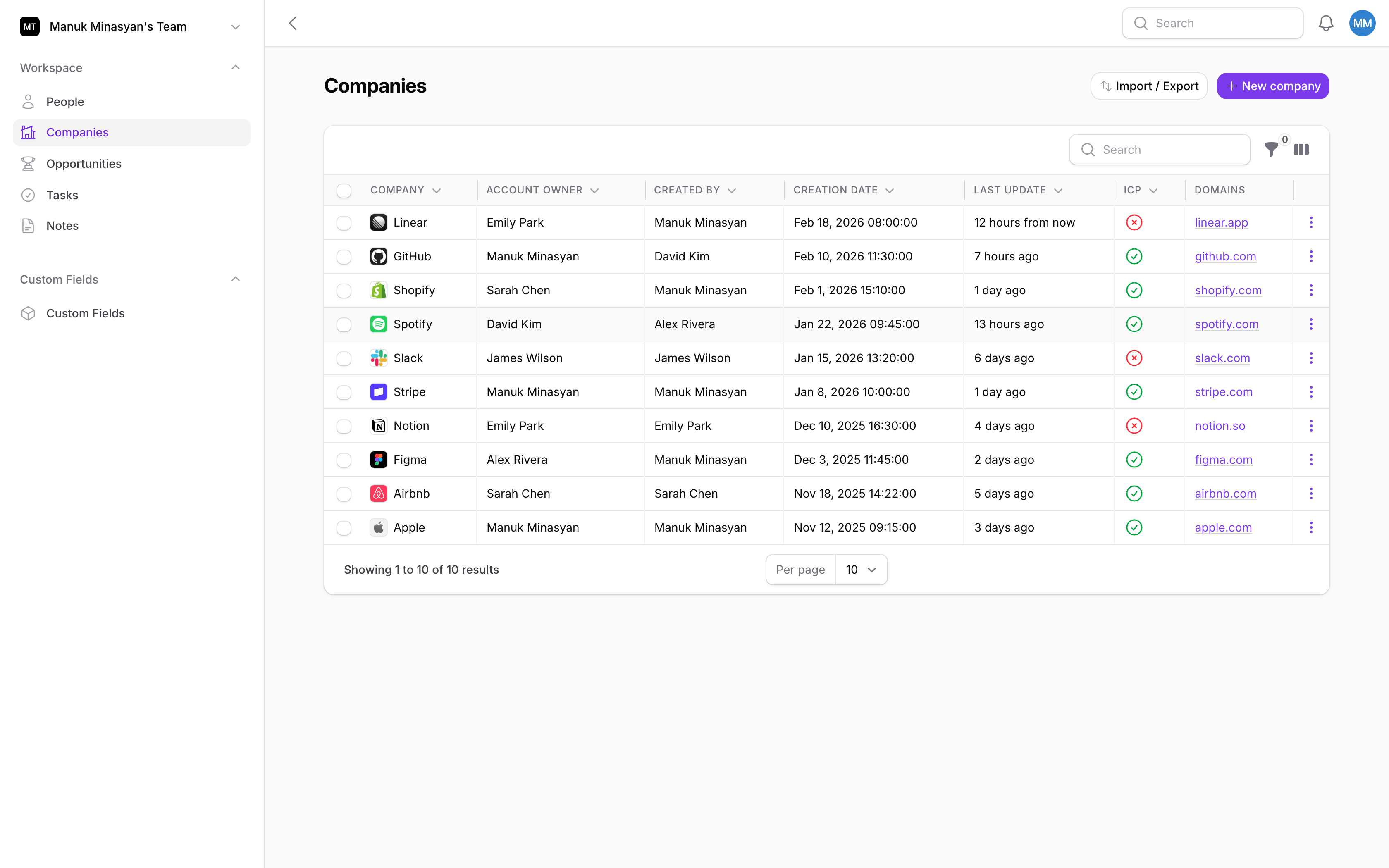
Relaticle is a self-hosted CRM with a production-grade MCP server. It ships 30 MCP tools that let any AI agent — Claude, GPT, or open-source models — perform full CRM operations: manage contacts, deals, pipelines, tasks, notes, and more.
Key features:
- 22 custom field types including entity relationships and conditional visibility
- Multi-team isolation with 5-layer authorization
- REST API with full CRUD and schema discovery for AI agents
- Built with Laravel 13, Filament 5, PHP 8.4
- 2,000+ automated tests and AGPL-3.0 licensed
- Per-field encryption for sensitive data
Deploy:
git clone https://github.com/Relaticle/relaticle.git
cd relaticle && composer app-install
composer dev
GitHub: github.com/relaticle/relaticle
If you're a developer-led team that wants AI agent integration without vendor lock-in, Relaticle is arguably the most capable open-source CRM available right now.
5. Rejourney — Lightweight Observability for Web & Mobile

Rejourney is an open-source, self-hostable observability tool for web and mobile apps. Unlike heavyweight competitors, it focuses on being lightweight and performant — their benchmarks show 3.9x smaller bundle size and 3x smaller upload payload than PostHog.
Key features:
- True FPS video playback of session replays — captures every rendered pixel including Mapbox, custom shaders, and GPU-accelerated views
- Automatic ANR/crash detection with full thread dumps
- Funnel analysis with ranked leak detection powered by "Marlin"
- Heatmaps showing taps, swipes, and scrolls
- User journey visualization for conversion optimization
- Geo-analytics for regional performance monitoring
Performance highlights (benchmarked):
Deploy: Docker Compose — docker compose -f docker-compose.selfhosted.yml up -d
GitHub: github.com/rejourneyco/rejourney
6. GeoPulse — Your Self-Hosted Google Timeline Alternative

GeoPulse transforms raw GPS data from OwnTracks, Overland, GPSLogger, Home Assistant, Traccar, and other sources into a searchable timeline of stays, trips, and movement patterns — all on your own infrastructure.
Key features:
- Automatic trip classification from raw GPS points
- Immich integration — your photos appear directly on your map timeline
- Rich analytics: distance, visit frequency, movement patterns
- Multi-user with per-visibility controls, guest access, and shareable links
- Import from Google Timeline, GPX, GeoJSON, and CSV
- Runs on under 100MB RAM and under 1% CPU in regular usage
- Optional AI insights via OpenAI-compatible API
- OIDC/SSO support alongside standard login
Deploy:
mkdir geopulse && cd geopulse
curl -L -o .env https://raw.githubusercontent.com/tess1o/GeoPulse/main/.env.example
curl -L -o docker-compose.yml https://raw.githubusercontent.com/tess1o/GeoPulse/main/docker-compose.yml
docker compose up -d
Also available via Helm for Kubernetes deployments.
GitHub: github.com/tess1o/geopulse
If you've been looking for a privacy-first alternative to Google Timeline, this is it. No telemetry, no analytics beacons, no third-party tracking.
7. OpenConnector — The Open-Source Composio Alternative

OpenConnector is an open-source connector gateway for AI agents — essentially an alternative to Composio. It connects 1,000+ SaaS providers and 10,000+ prebuilt Actions to AI agents through SDK, CLI, MCP, HTTP, and OpenAPI.
Key features:
- 1,000+ providers: GitHub, Gmail, Notion, BigQuery, Google Analytics, Supabase, Airtable, Slack, and more
- Multiple deployment options: Docker, Fly.io, Cloudflare Workers, or OOMOL's hosted runtime
- Credential handling for API keys, OAuth2, custom credentials, and no-auth providers
- Inspectable Action contracts with request/response schemas and required scopes
- Runtime controls for connection identity, scopes, allow/block policies, and run logs
- MCP endpoint at
http://localhost:3000/mcp
Deploy with Docker Compose:
services:
  openconnector:
    image: ghcr.io/oomol-lab/open-connector:latest
    ports:
      - "3000:3000"
    volumes:
      - ./data:/app/data
GitHub: github.com/oomol-lab/open-connector
For teams building agent products that need durable, inspectable access to user tools, OpenConnector is a serious piece of infrastructure.
8. Career-Ops — AI-Powered Job Hunting in Your CLI
Career-Ops turns any AI coding CLI (Claude Code, Codex, Gemini CLI, OpenCode, etc.) into a full job search command center. Built by someone who used it to evaluate 740+ job offers, generate 100+ tailored CVs, and land a Head of Applied AI role.
Key features:
- A-F scoring system across 10 weighted dimensions — no spray-and-pray
- Automated portal scanning for Greenhouse, Ashby, Lever, and company career pages
- ATS-optimized PDF CV generation tailored per job description
- Cover letter generation with research-backed keyword mirroring
- Company deep research using Playwright
- Negotiation scripts and salary frameworks
- Terminal dashboard (TUI) for pipeline management
- Human-in-the-loop — AI evaluates, you decide. Never auto-submits.
Quick start:
npx @santifer/career-ops initGitHub: github.com/santifer/career-ops
Note: This is a filter, not a spray tool. It scores low and recommends against applying to anything below 4.0/5. Your time is valuable.
9. AudioMuse-AI — Sonic Analysis for Your Music Library

AudioMuse-AI uses sonic analysis to rediscover forgotten songs in your music library and generate groove-aware playlists — all without metadata or external APIs. It integrates with Navidrome, Jellyfin, LMS, Lyrion, Emby, and Plex.
Key features:
- Music Map: visual 2D map of your library organized by sonic similarity
- Instant Playlists: tell the AI what you want ("high-tempo, low-energy") and get a playlist
- Song Paths: find tracks that bridge the sonic gap between two songs
- Sonic Fingerprint: playlist based on your listening habits
- Song Alchemy: mix your ideal vibe with ADD/SUBTRACT controls
- Lyrics Search: search by theme, story, or meaning in 72 languages
- Clustering: automatic genre-defying groups based on actual sound
Deploy with Docker Compose:
cp deployment/.env.example deployment/.env
docker compose -f deployment/docker-compose.yaml up -d
Access at http://localhost:8000.
GitHub: github.com/NeptuneHub/AudioMuse-AI
10. BirdNET-Go — 24/7 Wildlife Soundscape Analyzer

BirdNET-Go is a self-hosted, realtime soundscape analyzer for birds, bats, and other wildlife. It runs 24/7 on a Raspberry Pi, ingests soundcard input or network audio streams, runs multi-model AI classification, and presents detections in a fast web UI.
Key features:
- Multi-model AI: BirdNET v2.4 (6,500+ species), Google Perch v2 (14,795 species), BattyBirdNET (11 regional bat models), BirdNET Geomodel v3.0
- Live spectrogram streaming and detection heatmaps in the browser
- Alert rules engine routing to Discord, Slack, Telegram, ntfy, Pushover, Gotify, Matrix, webhooks, MQTT, shell scripts, and BirdWeather
- OIDC/SSO with Google, GitHub, and generic providers
- 15 UI languages, species names in 40+ languages
- Cross-model consensus — agreement between models strengthens confidence
Deploy:
curl -fsSL https://github.com/tphakala/birdnet-go/raw/main/install.sh -o install.sh
bash ./install.sh
Or via Docker images for linux/amd64 and linux/arm64.
GitHub: github.com/tphakala/birdnet-go
This is a fascinating project for anyone with a Raspberry Pi and an interest in nature — set it up in your garden and discover what wildlife visits while you sleep.
The MCP Thread
One pattern running through this episode is MCP (Model Context Protocol) support. TaskView, Relaticle, and OpenConnector all ship native MCP servers — letting AI agents interact with your data through a standardized protocol. If you're building agentic workflows, this is a trend worth watching. The days of manually wiring AI agents to your tools are ending.
Deploy Your Own
Every project here runs on your own hardware with Docker Compose. Most have single-command setup, handle their own dependencies, and ship with well-documented configuration. The common thread: you own your data, your infrastructure, and your uptime.
Which one will you deploy first?